Commercial Law UAE
by Admin
Posted on 10-07-2025 06:28 AM

Overview of Commercial Law in UAE
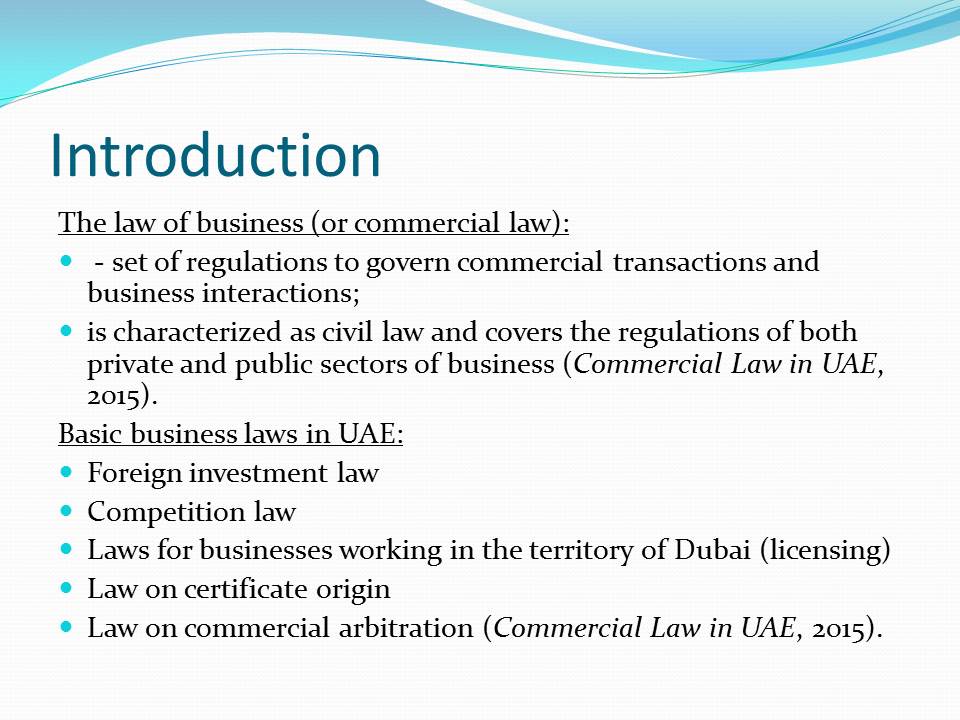
The UAE's commercial law is based on a combination of civil law and Islamic law (Shariah). The country's commercial transactions law is governed by Federal Law No. 18 of 1993, which regulates commercial transactions, including contracts, sales, and agency agreements. The law aims to provide a framework for businesses to operate within, ensuring fairness, transparency, and accountability. The UAE's commercial law also incorporates international best practices and standards, making it an attractive destination for foreign investors and businesses.
Key Aspects of Commercial Law in UAE
The UAE's commercial law covers a wide range of topics, including contracts, agency agreements, sales, and intellectual property rights. One of the key aspects of commercial law in the UAE is the concept of "contractual freedom," which allows parties to negotiate and agree on the terms of a contract. However, this freedom is subject to certain limitations and restrictions, such as the requirement to comply with UAE law and public policy. Additionally, the UAE's commercial law recognizes the importance of good faith and fairness in commercial transactions, requiring parties to act in a manner that is honest, transparent, and reasonable. In cases where disputes arise, it is often necessary to seek the advice of experienced UAE lawyers who can provide guidance on resolving disputes effectively.
Contract Law
Contract law is a critical component of commercial law in the UAE. The law governs the formation, performance, and termination of contracts, including the rights and obligations of parties involved. In the UAE, contracts can be written or oral, although written contracts are generally preferred as they provide a clear record of the agreement. The law also recognizes the concept of "consideration," which requires that a contract must be supported by something of value, such as money or a promise to perform a service.
Agency Agreements
Agency agreements are another important aspect of commercial law in the UAE. An agency agreement is a contract between two parties, where one party (the agent) is authorized to act on behalf of the other party (the principal). The UAE's commercial law regulates agency agreements, requiring that they be in writing and registered with the relevant authorities. The law also sets out the rights and obligations of agents and principals, including the agent's duty to act in the best interests of the principal.
Commercial Transactions and Contracts
Commercial transactions and contracts are the backbone of any business, and the UAE's commercial law provides a framework for these transactions to take place. The law regulates various types of commercial transactions, including sales, leases, and loans. It also sets out the requirements for contracts, including the need for offer and acceptance, consideration, and capacity. In addition, the law provides for the termination of contracts, including the grounds for termination and the consequences of termination.
Sales Transactions
Sales transactions are a common type of commercial transaction in the UAE. The law regulates sales transactions, including the requirements for a valid sale, such as the need for a clear description of the goods, a fixed price, and delivery of the goods. The law also sets out the rights and obligations of buyers and sellers, including the buyer's right to inspect the goods and the seller's obligation to deliver the goods in a timely manner.
Lease Transactions
Lease transactions are another type of commercial transaction regulated by the UAE's commercial law. The law governs the requirements for a valid lease, including the need for a written agreement, a fixed term, and a clear description of the leased property. The law also sets out the rights and obligations of landlords and tenants, including the tenant's right to quiet enjoyment of the property and the landlord's obligation to maintain the property.
Dispute Resolution and Enforcement
Dispute resolution and enforcement are critical aspects of commercial law in the UAE. The country has a well-established judicial system, with a network of courts and tribunals that hear commercial disputes. The law also provides for alternative dispute resolution mechanisms, such as arbitration and mediation. In addition, the UAE is a signatory to several international conventions, including the New York Convention on the Recognition and Enforcement of Foreign Arbitral Awards, which facilitates the recognition and enforcement of foreign arbitral awards in the UAE.
Arbitration
Arbitration is a popular method of dispute resolution in the UAE, particularly for commercial disputes. The law governs arbitration proceedings, including the requirements for a valid arbitration agreement, the appointment of arbitrators, and the conduct of arbitration proceedings. The UAE is also home to several arbitration centers, including the Dubai International Arbitration Centre (DIAC) and the Abu Dhabi Commercial Conciliation and Arbitration Centre (ADCCAC).
Enforcement of Judgments
The enforcement of judgments is an important aspect of commercial law in the UAE. The law provides for the enforcement of judgments, including the execution of court orders and the seizure of assets. The UAE is also a signatory to several international conventions, including the Hague Convention on the Recognition and Enforcement of Foreign Judgments, which facilitates the recognition and enforcement of foreign judgments in the UAE.
Intellectual Property Rights
Intellectual property rights are an essential aspect of commercial law in the UAE. The law regulates intellectual property rights, including patents, trademarks, copyrights, and trade secrets. The UAE is a signatory to several international conventions, including the Paris Convention for the Protection of Industrial Property and the Berne Convention for the Protection of Literary and Artistic Works, which provides for the protection of intellectual property rights in the UAE.
Patents
Patents are a type of intellectual property right that protects inventions and innovations. The UAE's commercial law regulates patents, including the requirements for patent registration, the scope of patent protection, and the duration of patent protection.
Trademarks
Trademarks are another type of intellectual property right that protects brand names, logos, and other distinctive signs. The UAE's commercial law regulates trademarks, including the requirements for trademark registration, the scope of trademark protection, and the duration of trademark protection.
Conclusion
In conclusion, the UAE's commercial law provides a comprehensive framework for businesses to operate within. The law regulates various aspects of commercial transactions, including contracts, agency agreements, sales, and intellectual property rights. It also provides for dispute resolution and enforcement mechanisms, including arbitration and the enforcement of judgments. As the UAE continues to grow and develop as a business hub, its commercial law will play an increasingly important role in facilitating business transactions and promoting economic growth.
FAQs
What is the main law that governs commercial transactions in the UAE?
The main law that governs commercial transactions in the UAE is Federal Law No. 18 of 1993.
What is the concept of "contractual freedom" in UAE commercial law?
The concept of "contractual freedom" in UAE commercial law refers to the ability of parties to negotiate and agree on the terms of a contract, subject to certain limitations and restrictions.
What is the difference between a sales transaction and a lease transaction in UAE commercial law?
A sales transaction involves the transfer of ownership of goods or property, while a lease transaction involves the granting of a right to use goods or property for a fixed period.
What are the main methods of dispute resolution in UAE commercial law?
The main methods of dispute resolution in UAE commercial law are arbitration, mediation, and litigation.
Can foreign judgments be enforced in the UAE?
Yes, foreign judgments can be enforced in the UAE, subject to certain conditions and requirements, including the need for the judgment to be recognized by the UAE courts.